POLARIS
Not the brightest, but steady
Polaris is only about the 50th brightest star. It matters because it lies very close to the north celestial pole, so it barely moves.
How to find it doodlestar
A NAKED-EYE GUIDE FROM THE UK
Two stars in the Plough point the way.

LOOK NORTH any clear night
≈ 430 light-years Distance to the North Star
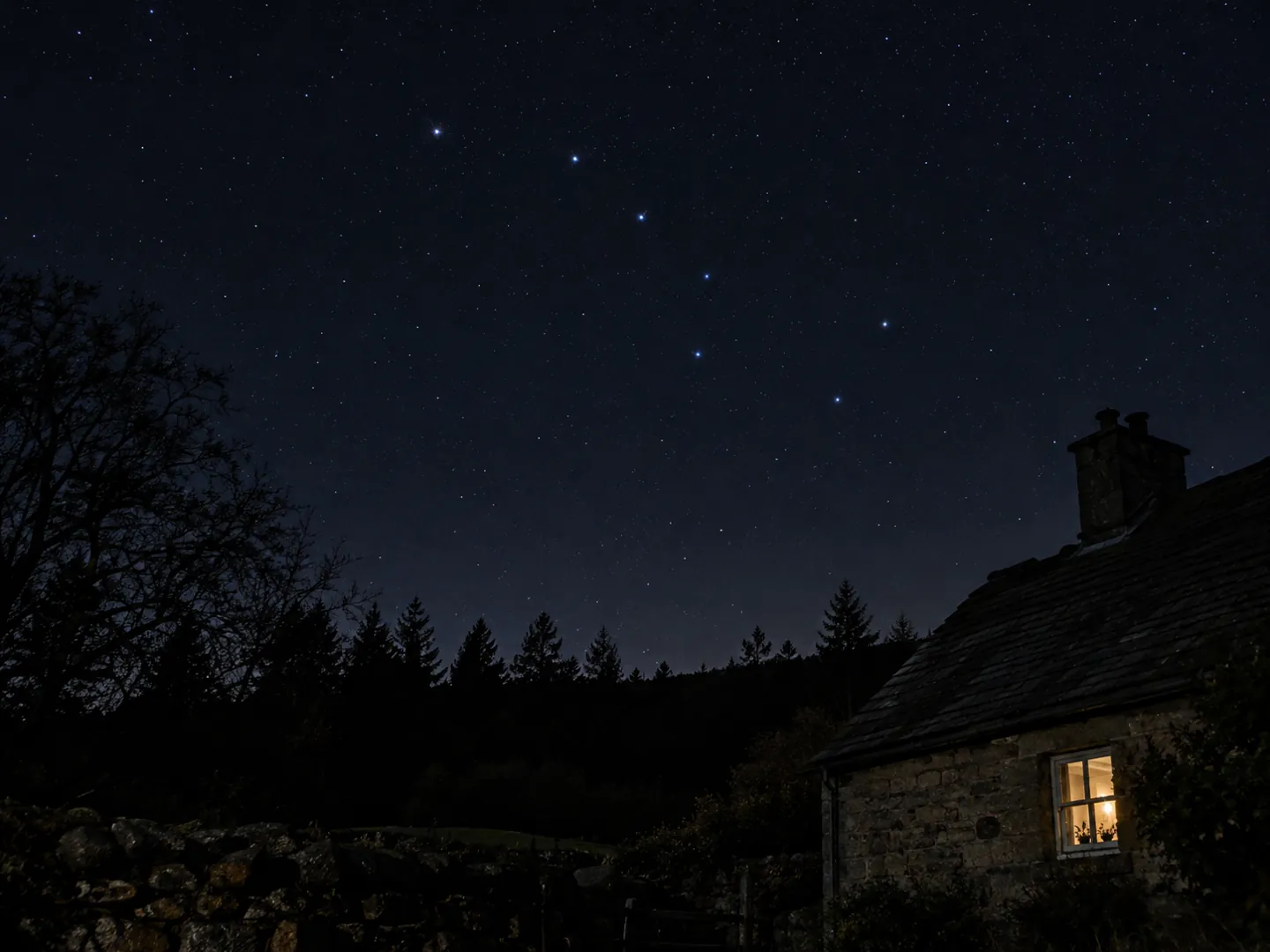
From the UK the Plough is up every clear night of the year. Two of its stars lead to Polaris, the North Star, which sits almost still while the rest of the sky turns around it.
THE SHORT ANSWER
Stars are suns, and their colour gives away their heat.
A few patterns are enough to start.
POLARIS
Polaris is only about the 50th brightest star. It matters because it lies very close to the north celestial pole, so it barely moves.
How to find itTHE PLOUGH
The Plough is not a constellation but a group of seven stars in Ursa Major, the Great Bear. From the UK it is visible year-round.
Use the pointersCOLOUR
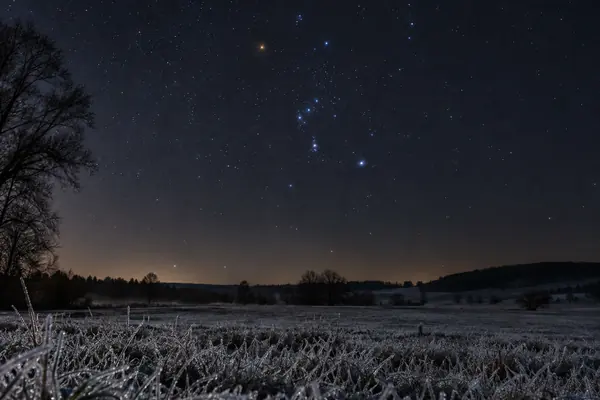
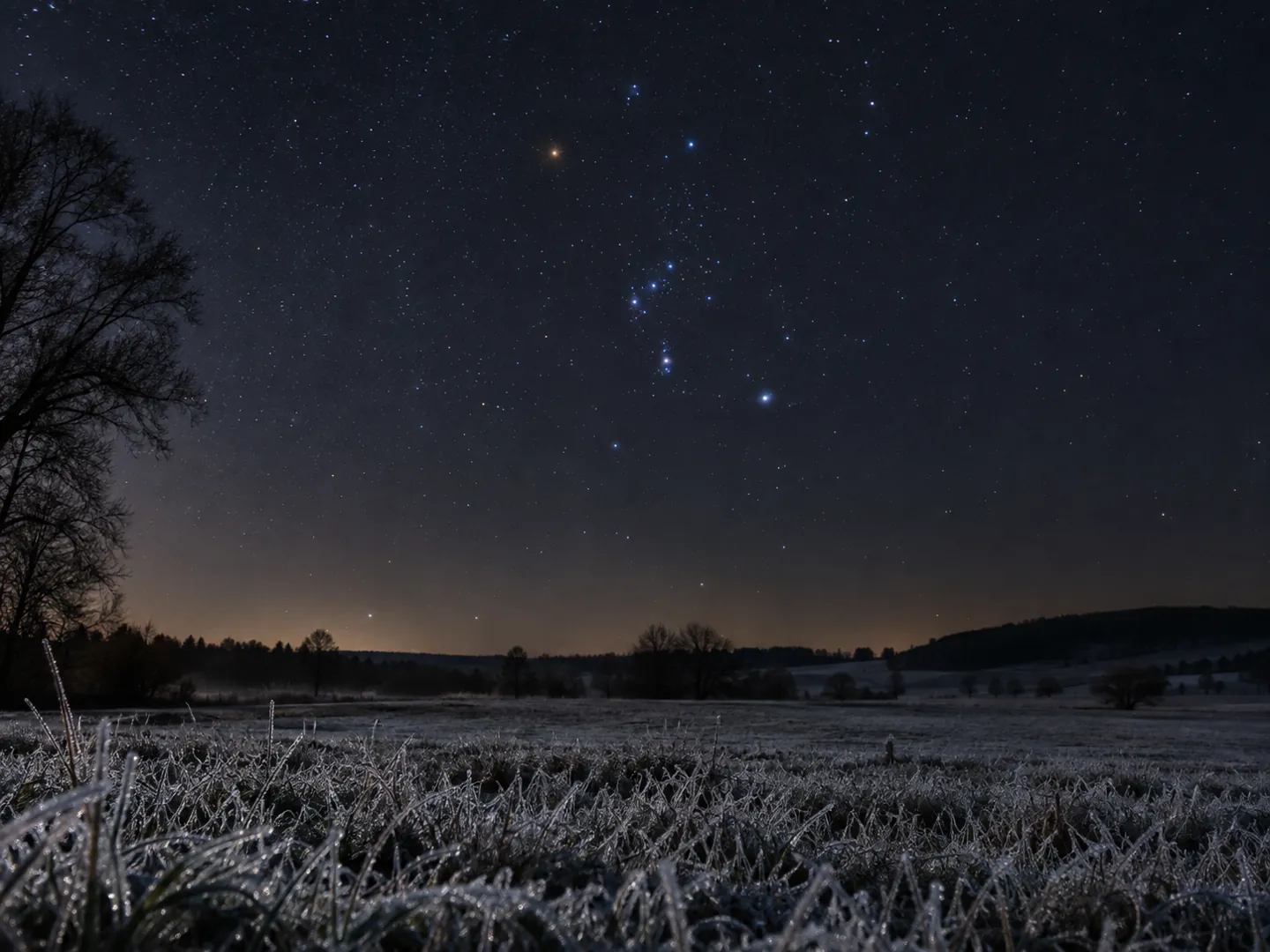
In Orion, orange-red Betelgeuse is around 3,200ºC at the surface, while blue-white Rigel is about 10,700ºC.
See the numbersA QUICK SKY CHECK
On a clear winter night, count the stars you can make out inside the main shape of Orion, then pick your result. The bar shows how much light pollution is likely hiding.
Let your eyes adjust and count from outdoors, away from direct lights. The bands come from the CPRE Star Count.
FOUR STEPS TO THE NORTH STAR
All you need is a clear night and a rough idea of which way is north. Give your eyes time to adjust before you start.
Look for a group of seven stars in the shape of a plough. It is part of Ursa Major and is up all year from the UK.
Draw a line from Merak to Dubhe, the two stars at the end of the blade, and carry it on past Dubhe.
The next fairly bright star along that line is Polaris. It sits about as high as your latitude: around 51° from London.
At the bend of the Plough's handle, look for faint Alcor beside Mizar, about a third of the Moon's width away.
TWO NUMBERS WORTH KNOWING
One figure on how far away the North Star is,
one on how much of the sky light pollution takes.
≈ 430 light-years
Distance to the North Star
The light you see from Polaris tonight left it roughly 430 years ago. It shines at about second magnitude.
POLARIS · SKY AT NIGHT
51%
Counters seeing 10 or fewer stars in Orion, 2023
That level means heavy light pollution. The figure was 61% in 2020, and only 5% saw more than 30 stars in 2023.
STAR COUNT · CPRE
Stars are giant balls of hot gas, mostly hydrogen with some helium, powered by nuclear fusion in their cores. NASA says our galaxy holds more than 100 billion of them, the Sun among them.
WHAT A STAR IS
A star is a giant ball of hot gas, mostly hydrogen with some helium. Pressure and heat in its core fuse hydrogen into helium, and the energy released keeps the star from collapsing under its own gravity.
Stars live from a few million to trillions of years: massive ones burn out fastest, while some low-mass stars will shine for trillions. NASA says our Sun is roughly midway through this main stage of its life.
Questions
No. Sky at Night magazine describes Polaris as only about the 50th brightest star. It is famous because it sits very close to the north celestial pole, so it hardly moves.
Find the Plough, then draw a line from Merak to Dubhe, the two stars at the end of its blade, and extend it. The next fairly bright star along the line is Polaris.
Yes. Sky at Night magazine says the Plough is visible year-round from the northern hemisphere, so on any clear night from the UK you can use it to find Polaris.
Colour depends on temperature, and red stars are cooler. Betelgeuse in Orion is around 3,200ºC at the surface, while blue-white Rigel is about 10,700ºC.
Try the method from the CPRE Star Count: count the stars you can see within Orion. Ten or fewer means heavy light pollution, and more than 30 means very dark skies.
Updated
ABOUT THIS NAME
doodlestar.com is part of the DoodleSale portfolio. Check the current listing and available purchase or lease options.